1: Advanced Diagnostic Evaluation
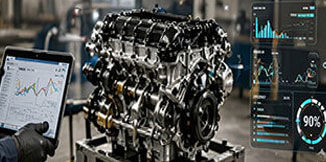
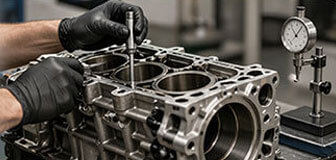
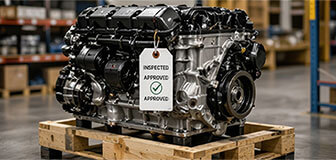
Electronic fault tracing is combined with compression, leak-down, and lubrication analysis to determine whether the engine is structurally suitable for reconditioning.
From the iconic 306DT V6 twin-turbo diesel to the latest Ingenium inline-six, we supply, rebuild, and fit precision-matched Range Rover 3.0 engines across the UK. Every engine unit code-verified, dynamically tested, and covered by up to 12 months' warranty.
Compare matching engine codes, valve counts, actual CC and power outputs linked to this engine size.
| Make | Model | Engine Code | Valves | Actual CC | Power kw / hp | Year Range | Action |
|---|---|---|---|---|---|---|---|
| Land Rover | Discovery 4 | 306DT | 24 | 2993 | 155 kw / 211 hp | 2009-continue | Get Quote |
| Land Rover | Discovery 5 | 306DT | 24 | 2993 | 155 kw / 211 hp | 2016-continue | Get Quote |
| Jaguar | F-Pace | 306DT | 24 | 2993 | 177 kw / 241 hp | 2015-continue | Get Quote |
| Jaguar | XF | 306DT | 24 | 2993 | 177 kw / 241 hp | 2008-2015 | Get Quote |
| Jaguar | XF Sportbrake | 306DT | 24 | 2993 | 177 kw / 241 hp | 2012-2014 | Get Quote |
| Jaguar | XJ | 306DT | 24 | 2993 | 177 kw / 241 hp | 1996-2003 | Get Quote |
Specialist knowledge across the full 3.0-litre diesel lineage from the Ford-era 306DT V6 TDV6 and bi-turbo SDV6 to the latest Ingenium I6 D300 and D350 MHEV units covering Range Rover Vogue, Sport, Velar, and Discovery models.
Every replacement undergoes engine code cross-referencing, donor suitability analysis, turbo configuration checks, and ECU compatibility validation, guaranteeing seamless integration before any engine leaves our workshop.
Sourcing, stripping, machining, reconditioning, quality control, and final installation, every process stays within our facility. No outsourced stages, no third-party variables.
Save thousands when you compare our prices to the franchised dealer rates, with up to 12 months warranty, which means total peace of mind on every Range Rover 3.0 engine we supply or fit across the UK.
The Range Rover 3.0 TDV6/SDV6 diesel engine delivers exceptional torque and refinement, but it can develop critical faults if servicing, oil quality, timing components, turbo health, or emissions systems are neglected. At Britannia Rebuilds, we pinpoint the exact failure before recommending repair, rebuild, reconditioning, or replacement.
| Problem | Early Causes | Solution |
|---|---|---|
| Crankshaft failure | Narrow bearing design inherited from the 2.7 TDV6 leads to oil starvation and crankshaft fatigue worsened by extended oil change intervals, blocked pick-up strainers, or low-quality servicing. | Stop driving immediately. Inspect bearings, crankshaft, and oil galleries. Severe damage typically requires a full long-engine replacement with a reconditioned or rebuilt unit. |
| Timing chain wear | Chain elongation and tensioner failure from infrequent oil changes or incorrect oil grade, causing timing drift, cold-start rattle, and eventual valve-to-piston contact risk. | Replace the timing chain, tensioners, guides, and sprockets as a complete kit. Inspect camshaft phasing and valve condition. Address oil quality to prevent recurrence. |
| Turbocharger failure | Oil starvation from blocked feed lines, DPF back-pressure overload, or variable geometry vane seizure is particularly common on high-mileage bi-turbo SDV6 variants. | Check turbo shaft play, oil feed and return lines, intercooler pipes, and DPF condition before replacing the turbocharger. Address the root cause to prevent repeat failure. |
| EGR cooler & valve failure | Internal EGR cooler leak introducing coolant into the intake tract, causing white smoke and gradual coolant loss. EGR valve carbon build-up restricts airflow and reduces power. | Replace the EGR cooler and valve. Flush the cooling system. Inspect the intake manifold for coolant contamination and carbon deposits. |
| DPF blockage | Frequent short journeys and urban stop-start driving prevent passive regeneration, causing soot overload and eventual DPF warning lights or forced limp mode. | Attempt forced DPF regeneration via diagnostic equipment. If severely blocked, replace the DPF. Take regular motorway drives to maintain regeneration cycles. |
| Injector over-fuelling | Faulty piezo injectors deliver incorrect spray patterns or excessive fuel, causing rough running, black smoke, piston wash, and accelerated bore wear. | Test all six injectors for back-leak and spray pattern. Replace faulty units and inspect pistons for wash damage. Re-code new injectors to the ECU. |
| Oil cooler & seal leaks | Degradation of the oil cooler gasket or oil filter housing seal is particularly common on 2010–2014 units, causing external oil leaks and potential coolant cross-contamination. | Replace oil cooler gaskets and oil filter housing seals. Flush the cooling system and check for oil-in-coolant contamination. Monitor after repair. |
| Low oil pressure at idle | Worn main and big-end bearings, blocked oil pick-up strainer, or degraded oil pump allowing pressure to drop below safe thresholds at idle — often a precursor to crankshaft failure. | Test oil pressure mechanically. Inspect the oil pick-up strainer, pump, and bearing clearances. If pressure is critically low, assess the engine for full rebuild or replacement. |
Note: Every 3.0 engine fault we encounter is diagnosed individually. We never recommend replacement without confirming the exact cause, protecting you from unnecessary cost and delivering the right solution first time.
Every Range Rover 3.0 diesel engine is assessed for failure severity, crankshaft integrity, turbo condition, and machining requirements before reconditioning begins, targeting the restoration of oil pressure, compression, timing accuracy, sealing integrity, and thermal stability across all six cylinders.
Electronic fault tracing is combined with compression, leak-down, and lubrication analysis to determine whether the engine is structurally suitable for reconditioning.
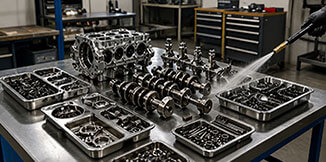
The unit is dismantled to core level and cleaned thoroughly to remove carbon, sludge, coolant residue, and metallic debris without compromising machined surfaces or gallery integrity.
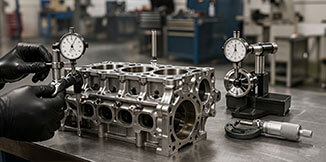
Cylinder geometry, crank journals, deck flatness, valve train wear and bearing tolerances are measured precisely, with honing, resurfacing, and seat correction carried out where required.
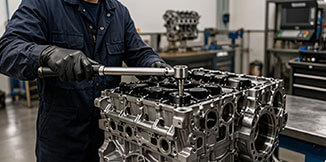
The engine is rebuilt using renewed wear components, updated timing and sealing hardware, and torque-angle assembly procedures to restore mechanical precision and durability.
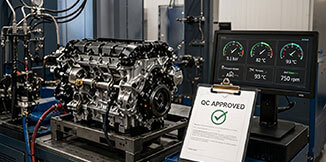
Final testing verifies oil pressure, idle stability, thermal behaviour, and ECU compatibility so the finished engine delivers factory-level refinement and dependable performance.
Every 3.0-litre replacement is validated for engine code accuracy, TDV6/SDV6/Ingenium variant matching, ECU integration, and drivetrain compatibility across all Range Rover, Sport, Velar, and Discovery applications.
Recent customer feedback from owners who used our engine supply, replacement, and fitting services.
They sourced the correct engine for my vehicle and the whole process was smooth from start to finish. Great communication and professional service throughout.
The rebuilt engine is perfect and running like new. I saved a significant amount compared to the main dealer and received fantastic advice and support. Very happy!
They verified my engine code, supplied the right engine and fitted it perfectly. Their knowledge and attention to detail gave me total peace of mind. Highly recommended.
Reconditioned engine supplied and fitted in less time than expected. The workshop team were professional and kept me updated at every stage.
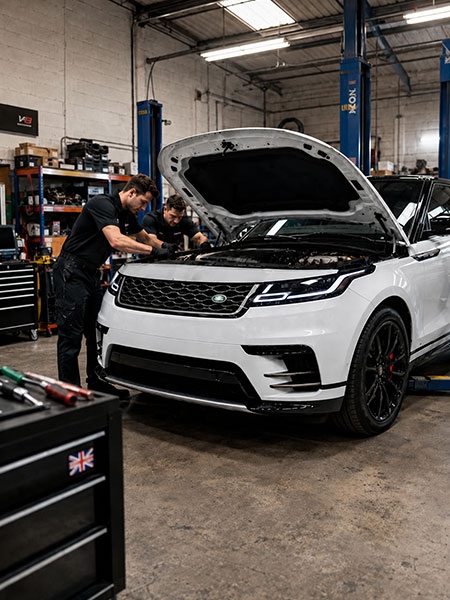
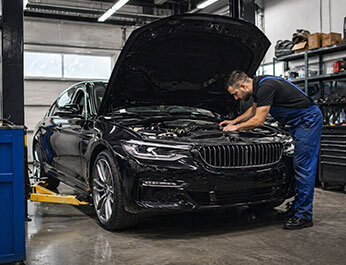
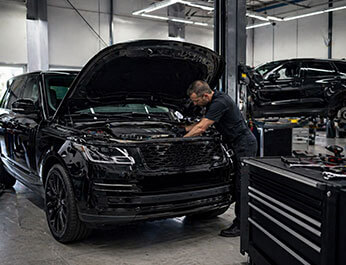
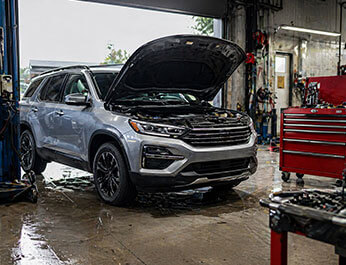
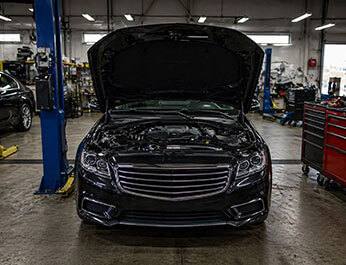
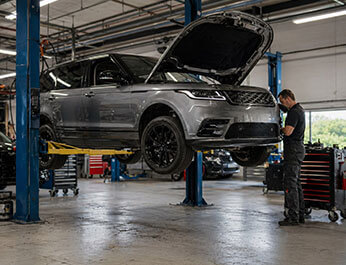
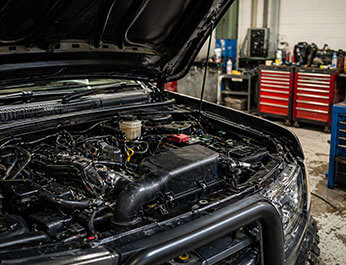
View genuine workshop images that show the quality of our ongoing work, completed replacements and finished results.
Replacing a Range Rover 3.0 engine begins with a clear diagnosis, not just a search for parts. At Britannia Rebuilds, we check each compression reading, investigate any oil pressure issues, assess the crankshaft condition, and evaluate the health of the turbo and emissions systems before deciding on the next steps. This careful process helps us figure out if your Range Rover needs a specific repair, a complete 3.0 engine rebuild, or a full powertrain replacement from our verified inventory.
If you need a Range Rover 3.0 engine, we have a wide selection of compression-tested used engines, fully rebuilt engines, and reconditioned 3.0 diesel engines ready for quick delivery across the UK. We carry engines that fit various models, including the Range Rover Vogue L405, Range Rover Sport L320 and L494, Velar L560, and Discovery 4 L319. We offer engines that match the exact model year and type, from the early TDV6 single-turbo to the bi-turbo SDV6 and SDV6 Hybrid, as well as the latest Ingenium I6 D300 and D350 MHEV units. Every engine is verified by code before we release it.
The 3.0-litre diesel is the most commonly used engine in the Range Rover lineup, and it needs careful matching. An incorrect or unverified engine can cause multiple issues, including ECU faults, turbo problems, and failures in the emissions system. That’s why every 3.0 engine we provide goes through our complete suitability checks to ensure it works well with your vehicle’s ECU mapping, additional configurations, exhaust system, and transmission settings. This way, your Range Rover will perform smoothly and efficiently, just as its 3.0 diesel was designed to do.
Quick answers about Range Rover engine supply, fitting, rebuilds, reconditioning, and warranty-related questions.