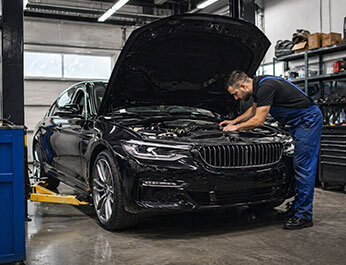
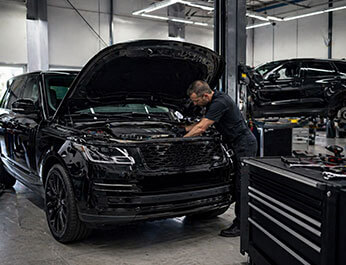
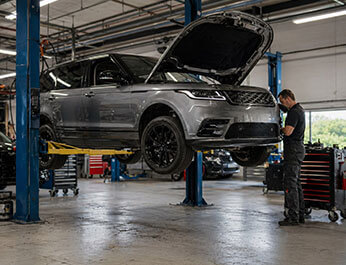
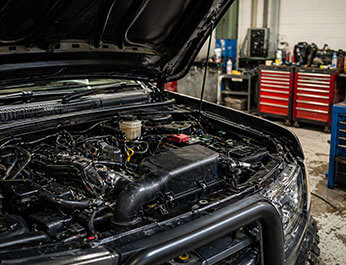
1: Advanced Diagnostic Evaluation
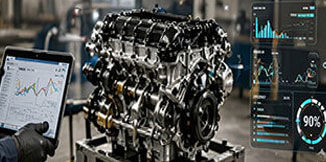
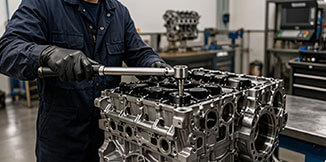
Electronic fault tracing is combined with compression, leak-down, and lubrication analysis to determine whether the engine is structurally suitable for reconditioning.
We supply, rebuild, and install verified Land Rover 3.0 diesel engines across the UK. Our engines power the Discovery 3, Discovery 4, Discovery 5, and Defender models, starting from the original 2.7 TDV6 to the latest Ingenium inline-six. Each engine is tested and comes with up to a 12-month warranty.
Compare matching engine codes, valve counts, actual CC and power outputs linked to this engine size.
| Make | Model | Engine Code | Valves | Actual CC | Power kw / hp | Year Range | Action |
|---|---|---|---|---|---|---|---|
| Land Rover | Discovery 4 | 306DT | 24 | 2993 | 155 kw / 211 hp | 2009-continue | Get Quote |
| Land Rover | Discovery 5 | 306DT | 24 | 2993 | 155 kw / 211 hp | 2016-continue | Get Quote |
| Jaguar | XF Sportbrake | 306DT | 24 | 2993 | 177 kw / 241 hp | 2012-2014 | Get Quote |
| Jaguar | XJ | 306DT | 24 | 2993 | 177 kw / 241 hp | 1996-2003 | Get Quote |
| Jaguar | F-Pace | 306DT | 24 | 2993 | 177 kw / 241 hp | 2015-continue | Get Quote |
| Jaguar | XF | 306DT | 24 | 2993 | 177 kw / 241 hp | 2008-2015 | Get Quote |
We have extensive knowledge of diesel engines used in Land Rover vehicles, starting with the 2.7 TDV6 in the Discovery 3 (2004–2009), moving to the 3.0 TDV6 and SDV6 306DT in the Discovery 4 (2009–2017), and now the Ingenium I6 D300/D350 in the Discovery 5 (2017+) and new Defender.
Before any engine leaves our workshop, we ensure a proper fit by checking engine codes, assessing crankshafts and bearings, matching turbo configurations, and validating ECU compatibility.
We handle every step in-house: sourcing, taking apart, machining, reconditioning, quality control, and installation. We don’t rely on outside companies, so everything is done here.
We offer significant savings compared to franchised dealers, with up to 12 months of warranty and complete confidence in every Land Rover 3.0 engine we provide or install anywhere in the UK.
The Land Rover 3.0 TDV6/SDV6 diesel delivers exceptional torque for towing, off-roading, and family duties, but it carries well-documented failure points, particularly on the Discovery models. At Britannia Rebuilds, we pinpoint the exact root cause before recommending repair, rebuild/reconditioning or full engine supply and replacement.
| Problem | Early Causes | Solution |
|---|---|---|
| Crankshaft & bearing failure | Narrow bearing design and restricted oil flow to the #3 and #4 main bearings under heavy load. Land Rover acknowledged the issue under reference SSM71816. Extended oil service intervals, blocked oil pick-up strainers, and frequent towing at high RPM accelerate wear and increase the risk of sudden failure. | Stop driving immediately. Inspect the crankshaft, bearings, and oil galleries. Once the crankshaft damages the engine block, a full long-engine replacement with a reconditioned or rebuilt unit is generally the only reliable repair option. |
| Oil pump casing failure (2.7 TDV6) | On the 2.7 TDV6, the aluminium oil pump casing can crack and cause an immediate loss of oil pressure. This often results in timing belt damage and catastrophic engine failure within seconds. | Replace the original oil pump casing with a reinforced updated unit during timing belt replacement. If the casing has already failed and engine damage has occurred, full engine replacement is usually required. |
| Timing belt & chain wear | The 3.0 306DT uses two timing belts and a timing chain, while the 2.7 TDV6 is belt-driven. Belts deteriorate with age and mileage, and missed replacement intervals can lead to piston-to-valve contact and severe engine damage. | Replace timing belts, tensioners, idlers, and the water pump as a complete service kit. Inspect the timing chain and tensioners at the same time and follow the manufacturer's 7-year/105,000-mile service interval without exception. |
| Turbocharger failure | Oil starvation, restricted oil feed lines, variable geometry vane seizure, or excessive DPF back-pressure can overload turbocharger bearings. This is particularly common on higher-mileage Discovery 4 SDV6 models used regularly for towing. | Inspect turbocharger shaft play, oil feed and return lines, VGT actuator operation, and DPF condition before replacing the turbocharger. On 2.7 TDV6 engines, actuator and vacuum system faults should be ruled out before major component replacement. |
| EGR cooler & valve failure | Internal EGR cooler leaks can introduce coolant into the intake system, causing white exhaust smoke, unexplained coolant loss, and contamination of intake components. Carbon build-up within the EGR valve can also restrict airflow and reduce engine performance. | Replace the EGR cooler and valve assembly. Flush the cooling system and inspect the intake manifold and cylinder head for contamination or damage caused by coolant ingress. |
| DPF blockage | Frequent short journeys and urban driving prevent successful passive DPF regeneration. This leads to soot accumulation, warning lights, reduced performance, and eventual limp-home mode. | Carry out a forced DPF regeneration using diagnostic equipment where appropriate. If blockage levels are excessive, replace the DPF. Regular motorway driving helps maintain successful regeneration cycles. |
| Injector seal failure | Copper injector seals deteriorate over time, allowing combustion gases to escape past the injector seat. Common symptoms include a distinctive "chuffing" noise, diesel odour in the engine bay, and rough engine operation. | Replace all injector seals and copper washers. Clean injector seating surfaces thoroughly, test injector back-leak rates and spray patterns, and re-code injectors to the ECU where necessary. |
| Low oil pressure at idle | Worn main or big-end bearings, a degraded oil pump, or a blocked oil pick-up strainer can allow oil pressure to fall below safe operating levels. This is often one of the earliest warning signs before major crankshaft failure on both the 2.7 and 3.0 engines. | Perform a mechanical oil pressure test. Inspect the oil pick-up strainer, oil pump condition, and bearing clearances. If oil pressure is critically low, assess the engine for rebuild viability or replacement before catastrophic failure occurs. |

Note: Land Rover acknowledged crankshaft and bearing concerns under reference SSM71816. We recommend oil and filter changes every 6,000 miles rather than following the factory 15,000-mile service interval. Shorter oil change intervals help maintain oil pressure, reduce bearing wear, and significantly improve long-term engine reliability.
Every Land Rover 3.0 diesel undergoes rigorous failure analysis, crankshaft integrity assessment, and precision machining before reconditioning begins, targeting the restoration of oil pressure, compression, timing accuracy, and thermal stability across all six cylinders.
Electronic fault tracing is combined with compression, leak-down, and lubrication analysis to determine whether the engine is structurally suitable for reconditioning.
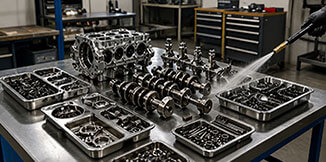
The unit is dismantled to core level and cleaned thoroughly to remove carbon, sludge, coolant residue, and metallic debris without compromising machined surfaces or gallery integrity.
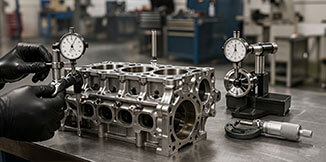
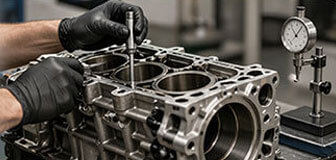
Cylinder geometry, crank journals, deck flatness, valve train wear and bearing tolerances are measured precisely, with honing, resurfacing, and seat correction carried out where required.
The engine is rebuilt using renewed wear components, updated timing and sealing hardware, and torque-angle assembly procedures to restore mechanical precision and durability.
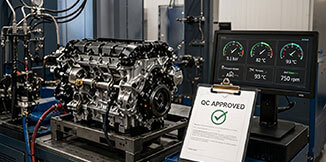
Final testing verifies oil pressure, idle stability, thermal behaviour, and ECU compatibility so the finished engine delivers factory-level refinement and dependable performance.
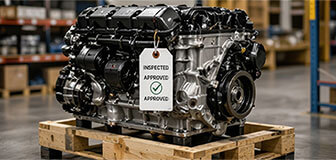
Every replacement is validated for engine code accuracy, 2.7/3.0/Ingenium variant matching, ECU compatibility, and drivetrain integration across Discovery 3, 4, 5, and Defender applications.
Recent customer feedback from owners who used our engine supply, replacement, and fitting services.
They sourced the correct engine for my vehicle and the whole process was smooth from start to finish. Great communication and professional service throughout.
The rebuilt engine is perfect and running like new. I saved a significant amount compared to the main dealer and received fantastic advice and support. Very happy!
They verified my engine code, supplied the right engine and fitted it perfectly. Their knowledge and attention to detail gave me total peace of mind. Highly recommended.
Reconditioned engine supplied and fitted in less time than expected. The workshop team were professional and kept me updated at every stage.
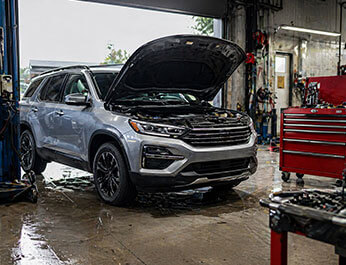
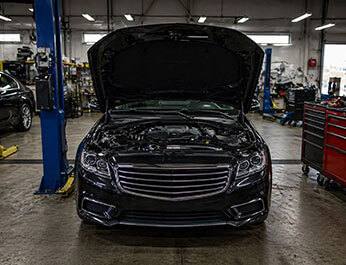
View genuine workshop images that show the quality of our ongoing work, completed replacements and finished results.
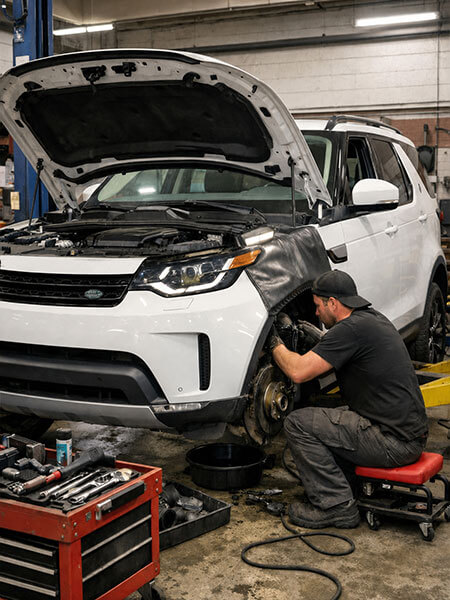
A proper replacement for a Land Rover 3.0 engine starts with a clear diagnosis. At Britannia Rebuilds, we carefully check every compression reading and assess the condition of the crankshaft bearings. We also evaluate the health of the turbo and EGR systems. For Discovery 3 models, we inspect the oil pump casing before suggesting any next steps. This thorough process helps us decide if your Discovery needs a specific repair, a full engine rebuild, or a complete powertrain replacement from our trusted stock.
If you're looking to buy a Land Rover 3.0 engine, we have a wide range in stock. For Discovery 3 owners, we offer tested 2.7 TDV6 units with reinforced oil pump options. For Discovery 4 owners who often face crankshaft issues, we have a good supply of used, rebuilt, and fully reconditioned 3.0 306DT engines in both TDV6 and SDV6 bi-turbo versions. For Discovery 5 and new Defender owners, we stock the Ingenium I6 D300 and D350 engines. Every engine is verified by code before it is released.
The Land Rover 3.0 diesel family was developed in partnership with Ford and PSA, and is also known as AJD-V6. It is used in Jaguar, Peugeot, and Citroën vehicles. Choosing the right variant is crucial: the 2.7, 3.0 TDV6, 3.0 SDV6, and Ingenium I6 are fundamentally different engines with unique turbo setups, ECU settings, timing drives, and layouts. That's why we ensure each 3.0 engine goes through our full compatibility check. This guarantees that it will work seamlessly with your vehicle's electronics, drivetrain, emissions systems, and towing settings. The result is a Discovery or Defender that works as it should, powerful, reliable, and ready for any challenge in the UK.
Quick answers about Land Rover engine supply, fitting, rebuilds, reconditioning, and warranty-related questions.