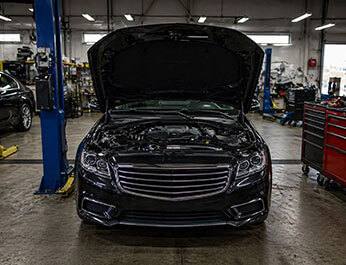
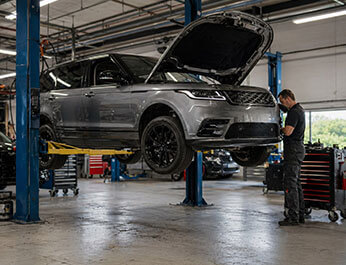
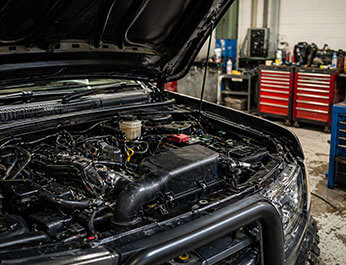
1: Advanced Diagnostic Evaluation
Electronic fault tracing is combined with compression, leak-down, and lubrication analysis to determine whether the engine is structurally suitable for reconditioning.
We cover every 4.4-litre V8 engine ever installed in a Range Rover, including the BMW M62 and Jaguar AJ41 petrol engines, as well as the powerful 448DT TDV8/SDV8 twin-turbo diesel. We source, rebuild, and install code-verified engines across the UK. Each unit is thoroughly tested and comes with a warranty for your peace of mind.
We provide expert knowledge on all 4.4 V8 engine types, including the BMW M62 (L322 2002–2005), Jaguar AJ41 448PN petrol (L322/L320 2005–2009), and the Ford 448DT TDV8 and SDV8 twin-turbo diesel (L322/L405/L494 2010–2020).
Before any engine leaves our facility, we ensure a perfect fit by checking engine codes, inspecting donor blocks, verifying compatibility of parts, and matching ECUs.
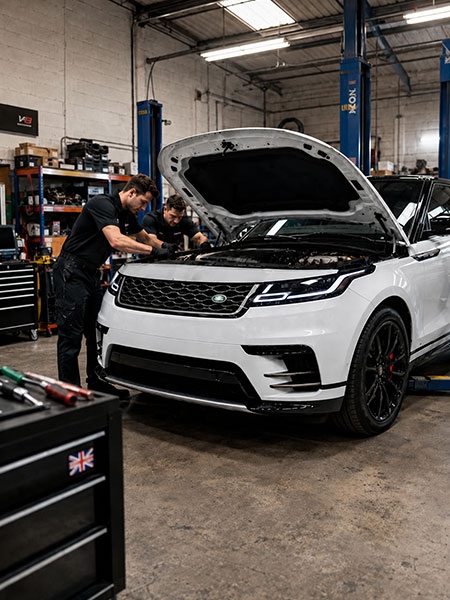
All steps, including sourcing, dismantling, machining, reconditioning, quality control, and installation, take place in-house. We do not rely on outside companies, so you can trust that everything is done by our team.
You can save thousands compared to dealership rates. We offer up to 12 months warranty and complete confidence in every 4.4 V8 engine we supply or install throughout the UK.
The Range Rover 4.4 V8 engine is a formidable powerplant, but each variant carries some common failure points. At Britannia Rebuilds, we identify the exact root cause before recommending repair, rebuild, remanufacture or full replacement, whether it is BMW M62 petrol, Jaguar AJ41 petrol or 448DT TDV8/SDV8 diesel variants.
| Problem | Early Causes | Solution |
|---|---|---|
| Timing chain & guide wear | Plastic chain guides become brittle with age and heat — especially on the BMW M62 and Jaguar AJ41 petrol V8 — causing rattle on cold start, timing drift, and risk of catastrophic valve contact. | Replace timing chains, tensioners, guides, and sprockets as a complete kit. On M62 units, also replace the anti-drain-back check valves behind the VANOS solenoids. |
| Oil cooler gasket failure (448DT) | Gasket degradation between the oil cooler and V-block on the 4.4 diesel, causing oil to leak into the cooling system — the most commonly reported 448DT issue. | Replace oil cooler gaskets, flush the cooling system, and test for oil-in-coolant contamination. Monitor closely after repair to confirm no secondary issues. |
| Coolant system failures (Petrol V8) | Plastic coolant pipe connectors, thermostat housings, and water pump impellers degrade with thermal cycling — common on both M62 and AJ41 units — leading to overheating and head gasket risk. | Replace the thermostat, water pump, and any brittle plastic connectors with upgraded components. Pressure-test the system and check head gasket integrity if overheating has occurred. |
| Crankcase ventilation valve failure | The CCV (crankcase vent) on petrol V8 fails with age, causing excessive oil consumption, blue/white exhaust smoke, and rough idle from unmetered air entering the intake. | Replace the crankcase ventilation valve and hoses. Check the intake manifold for oil contamination and clean the throttle body and MAF sensor. |
| Turbo oil drain pipe deterioration (448DT) | Factory-fitted oil return pipe from the turbocharger perishes on early TDV8 diesel units, causing oil to leak onto the exhaust manifold, creating smoke and fire risk. | Replace the turbo oil drain pipe with the updated design part. Inspect turbo bearings and oil feed lines simultaneously to prevent secondary damage. |
| Oil leaks at section joints | The V8 block is manufactured in sections — gaskets between these sections degrade over time, causing persistent oil weeps from the engine mid-section, especially on the AJ41 petrol. | Reseal the engine section joints using OEM-specification sealant. Inspect the sump gasket and rear main seal at the same time. This typically requires engine removal. |
| Inlet manifold hose splitting (448DT) | Rubber boost hoses between the intercooler and inlet manifold harden and crack from sustained heat exposure on the diesel V8, causing boost leaks and power loss. | Replace all cracked or hardened boost hoses. Pressure-test the system for leaks and inspect the intercooler for internal oil contamination. |
| VANOS solenoid faults (M62) | Oil sludge and heat cause the VANOS variable valve timing solenoids and their check valves to seize or leak on the BMW M62 petrol V8, leading to rough idle and loss of low-end torque. | Clean or replace VANOS solenoids and their anti-drain-back check valves. Use correct-grade oil and reduce oil change intervals to 6,000 miles to prevent recurrence. |
Note: Every 4.4 V8 fault is diagnosed on its own merits. Petrol and diesel require entirely different diagnostic approaches. We never recommend replacement without confirming the root cause first.
Every Range Rover 4.4 V8, whether petrol or diesel, undergoes rigorous failure analysis, rebuild viability assessment, and precision machining before reconditioning begins. This process targets the restoration of compression, oil pressure, timing accuracy, and thermal performance across all eight cylinders.
Electronic fault tracing is combined with compression, leak-down, and lubrication analysis to determine whether the engine is structurally suitable for reconditioning.
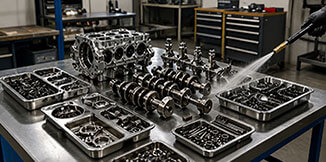
The unit is dismantled to core level and cleaned thoroughly to remove carbon, sludge, coolant residue, and metallic debris without compromising machined surfaces or gallery integrity.
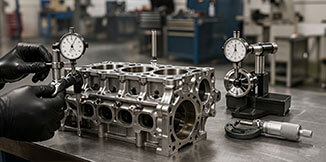
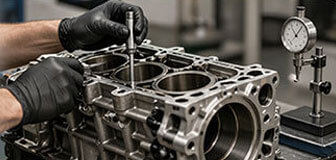
Cylinder geometry, crank journals, deck flatness, valve train wear and bearing tolerances are measured precisely, with honing, resurfacing, and seat correction carried out where required.
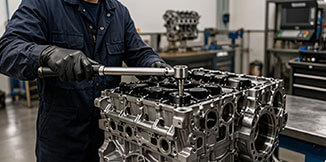
The engine is rebuilt using renewed wear components, updated timing and sealing hardware, and torque-angle assembly procedures to restore mechanical precision and durability.
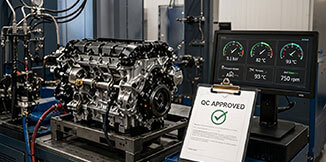
Final testing verifies oil pressure, idle stability, thermal behaviour, and ECU compatibility so the finished engine delivers factory-level refinement and dependable performance.
Every 4.4 replacement is validated for engine code accuracy, petrol/diesel variant matching, ECU compatibility, and ancillary integration across all Range Rover V8 applications.
Recent customer feedback from owners who used our engine supply, replacement, and fitting services.
They sourced the correct engine for my vehicle and the whole process was smooth from start to finish. Great communication and professional service throughout.
The rebuilt engine is perfect and running like new. I saved a significant amount compared to the main dealer and received fantastic advice and support. Very happy!
They verified my engine code, supplied the right engine and fitted it perfectly. Their knowledge and attention to detail gave me total peace of mind. Highly recommended.
Reconditioned engine supplied and fitted in less time than expected. The workshop team were professional and kept me updated at every stage.
View genuine workshop images that show the quality of our ongoing work, completed replacements and finished results.
A credible engine replacement for the Range Rover 4.4 starts with a diagnosis rather than just a catalogue. At Britannia Rebuilds, we check the compression balance, review oil pressure, inspect the timing chain, and, for diesel models, evaluate the turbo and exhaust systems before we suggest any action. This structured approach helps us decide whether your Range Rover needs a specific repair, a full V8 rebuild, or a complete engine replacement from our verified stock.
If you need a Range Rover 4.4 engine, we have a wide selection across all three V8 generations. We offer tested BMW M62B44 petrol V8 engines for early L322 models, Jaguar AJ41 448PN petrol engines for 2005–2009 L322 and L320 Sport models, and a strong supply of used, rebuilt, and fully reconditioned 448DT TDV8 and SDV8 twin-turbo diesel engines for L322, L405 Vogue, Autobiography, and L494 Sport. Every engine is code-verified before we release it.
Getting the right 4.4 engine is crucial. The BMW M62, Jaguar AJ41, and Ford-made 448DT engines are different designs, even though they share the same size. Installing the wrong engine can cause problems with the ECU, make parts incompatible, and lead to wiring issues. That’s why every 4.4 V8 we supply goes through our compatibility checks to ensure it works with your vehicle’s electronics, drivetrain, and, if needed, twin-turbo and exhaust systems. This ensures your Range Rover performs the way its V8 was intended to.
Quick answers about Range Rover engine supply, fitting, rebuilds, reconditioning, and warranty-related questions.