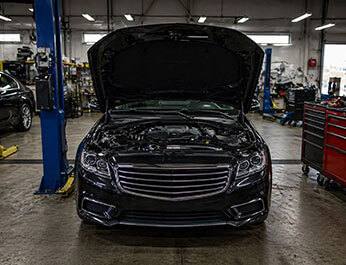
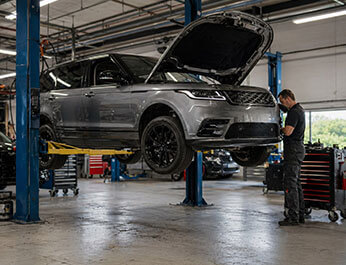
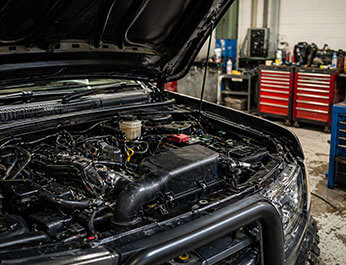
1: Advanced Diagnostic Evaluation
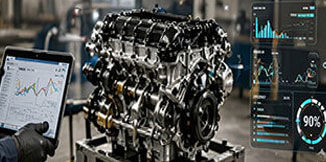
Electronic fault tracing is combined with compression, leak-down, and lubrication analysis to determine whether the engine is structurally suitable for reconditioning.
At Britannia Rebuilds, we supply, rebuild and fit high-quality replacement 2.2 litre diesel engines for all Land Rover models in the UK. Our stock covers both the transverse 224DT engine family and the longitudinal Defender Puma engine.
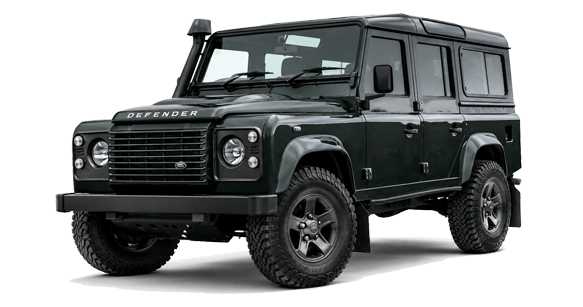
Hands-on expertise across every Land Rover 2.2 application, Freelander 2 (L359, 2006–2014), early Discovery Sport (L550, 2014–2016), and Defender TD4 (2011–2016), covering TD4 (150 bhp), SD4 (190 bhp), and eD4 (150 bhp FWD) variants.
Every replacement begins with engine code confirmation, donor condition assessment, timing belt service history, and ECU-matching validation, ensuring exact compatibility before any engine is dispatched or fitted.
From sourcing and reconditioning to machining, quality control, and installation — nothing is outsourced. No third-party variables, no unknown stages.
Save significantly over main dealer rates with up to 12 months warranty and complete peace of mind on every Land Rover 2.2 224DT engine we supply or fit across the UK.
The Land Rover 2.2 TD4 224DT diesel is widely regarded as the most reliable modern engine Land Rover has ever offered, but it still carries specific failure points, especially on higher-mileage Freelander and Discovery Sport with incomplete service histories. At Britannia Rebuilds, we identify the exact fault before recommending repair, rebuild, reconditioning, or replacement.
| Problem | Early Causes | Solution |
|---|---|---|
| Timing belt failure | The 224DT uses a belt-driven cam system requiring replacement every 7 years or 105,000 miles. Missed intervals risk the belt snapping and causing catastrophic piston-to-valve contact. Many used Freelander vehicles have overdue belts. | Replace both timing belts, tensioners, idlers, and water pump as a complete kit. Never skip this service — a snapped front belt destroys the engine. Verify belt history before buying any used Freelander 2. |
| DPF blockage | Frequent short journeys, school runs, and urban stop-start driving prevent passive DPF regeneration — extremely common on Freelander and Discovery Sports used as family daily drivers in towns and cities. | Attempt forced DPF regeneration via diagnostic equipment. If severely blocked, replace the DPF unit. Take regular motorway journeys at sustained speed to maintain regeneration cycles and prevent future blockage. |
| EGR valve carbon build-up | Soot and carbon deposits restrict the EGR valve, causing rough idle, power loss, increased emissions, and engine management warning lights, worsened by low-speed urban driving patterns. | Clean or replace the EGR valve. Inspect the intake manifold for carbon deposits. Check the EGR cooler for internal leaks. Regular motorway driving reduces carbon build-up significantly. |
| Turbocharger failure | Oil starvation from restricted feed lines, wastegate actuator malfunction, or carbon contamination causing turbo bearing wear or seizure — often presents as sudden power loss and black exhaust smoke. | Inspect turbo shaft play, oil feed and return lines, and wastegate actuator. Replace the turbocharger and address the root cause. Check oil feed pipe for carbon restriction before fitting a new unit. |
| Oil sump seal leaks | The 224DT is well-known for developing persistent oil leaks at the sump gasket, rocker cover, and crankshaft front seal, particularly on engines over 80,000 miles with hard-baked original gaskets. | Replace the sump gasket, rocker cover seal, and crankshaft front oil seal. Clean all mating surfaces thoroughly. Inspect the PCV valve and crankcase breather. A failed PCV causes excess crankcase pressure that accelerates seal failure. |
| PCV valve failure | The crankcase ventilation valve (PCV) fails with age, causing excessive oil consumption, blue/white exhaust smoke, rough idle, and, if left unchecked, oil being pushed past weakened seals throughout the engine. | Replace the PCV valve and associated hoses. Clean the intake manifold and throttle body of oil contamination. Check and replace any seals that have been overloaded by excessive crankcase pressure. |
| Fuel injector issues | Contaminated fuel or carbon deposits cause injector spray pattern deterioration, leading to rough running, misfires, poor cold starts, and increased smoke. Electrical faults can also disrupt injector timing on high-mileage units. | Test all four injectors for back-leak rate and spray pattern. Replace faulty units and recode new injectors to the ECU. Use quality fuel and consider periodic fuel additive treatments to prevent carbon build-up. |
| Camshaft wear (early units) | On first-generation 224DT engines (2006–2009), the camshaft on the high-pressure fuel pump drive side was prone to premature wear, causing rough running and reduced fuel pressure — a design weakness addressed in later production. | Inspect camshaft lobes on the fuel pump drive side. If wear is detected, replace the camshaft and inspect the high-pressure fuel pump drive coupling. Ensure the correct oil grade (5W-30) is used at all times. |
Note: The 224DT has earned its "bulletproof" reputation, but only when serviced correctly. We diagnose every fault on its own merits and never recommend engine replacement without first confirming the exact root cause.
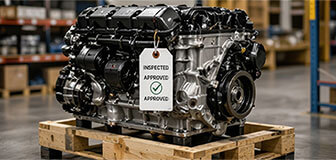
Every Land Rover 2.2 diesel engine undergoes rigorous failure analysis, rebuild viability assessment, and precision machining before reconditioning begins, targeting the restoration of compression, oil pressure, timing accuracy, and thermal stability.
Electronic fault tracing is combined with compression, leak-down, and lubrication analysis to determine whether the engine is structurally suitable for reconditioning.
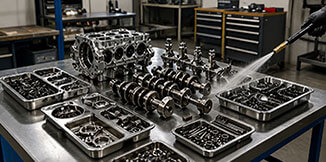
The unit is dismantled to core level and cleaned thoroughly to remove carbon, sludge, coolant residue, and metallic debris without compromising machined surfaces or gallery integrity.
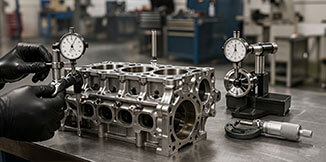
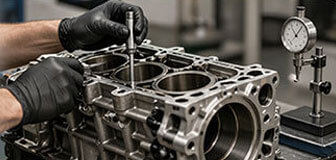
Cylinder geometry, crank journals, deck flatness, valve train wear and bearing tolerances are measured precisely, with honing, resurfacing, and seat correction carried out where required.
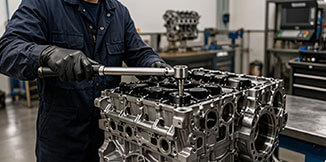
The engine is rebuilt using renewed wear components, updated timing and sealing hardware, and torque-angle assembly procedures to restore mechanical precision and durability.
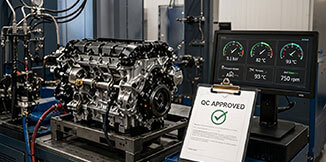
Final testing verifies oil pressure, idle stability, thermal behaviour, and ECU compatibility so the finished engine delivers factory-level refinement and dependable performance.
Every Land Rover 2.2 replacement is validated for engine code accuracy, TD4/SD4/eD4 variant matching, ECU compatibility, and drivetrain integration across Freelander 2, Discovery Sport, and Defender models.
Recent customer feedback from owners who used our engine supply, replacement, and fitting services.
They sourced the correct engine for my vehicle and the whole process was smooth from start to finish. Great communication and professional service throughout.
The rebuilt engine is perfect and running like new. I saved a significant amount compared to the main dealer and received fantastic advice and support. Very happy!
They verified my engine code, supplied the right engine and fitted it perfectly. Their knowledge and attention to detail gave me total peace of mind. Highly recommended.
Reconditioned engine supplied and fitted in less time than expected. The workshop team were professional and kept me updated at every stage.
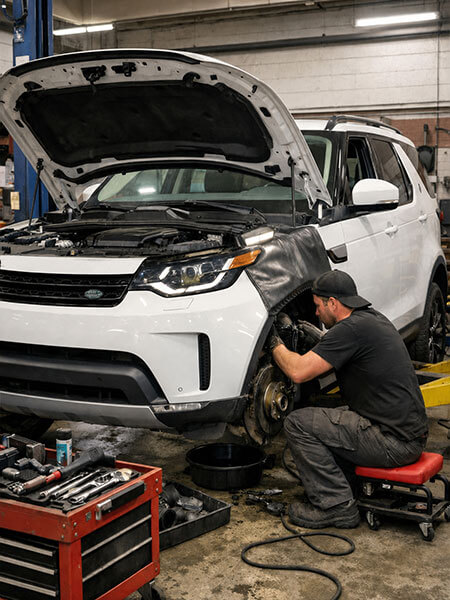
View genuine workshop images that show the quality of our ongoing work, completed replacements and finished results.
When you need a replacement for a Land Rover 2.2 engine, it's important to start with careful diagnostics. At Britannia Rebuilds, we check every detail: compression readings, timing belt condition, turbo response, and exhaust treatment health. This careful examination helps us decide if your Freelander, Discovery Sport, or Defender needs a specific repair, a full 224DT rebuild, or a complete engine replacement from our trusted stock.
If you're looking for a Land Rover 2.2 engine for sale, we have a large selection of tested used engines, fully rebuilt units, and precision-reconditioned 224DT engines available for quick delivery across the UK. We can match engines to your specific model, whether it's a Freelander 2 TD4, Freelander 2 SD4 automatic, eD4 front-wheel-drive, early Discovery Sport L550, or Defender TD4. Each engine is checked against the engine code before it goes out.
The 224DT engine is based on the Ford-PSA Duratorq ZSD-422 platform. It is also used in the Jaguar XF and X-Type as the 2.2D and by Peugeot-Citroën as the DW12M, and by Ford as the Q4BA. It’s crucial to get the Land Rover-specific version right. The TD4, SD4, and eD4 have different turbo settings, ECU mapping, and gearbox integration. This is why every 2.2 engine we sell goes through our full compatibility check. This ensures it will work well with your vehicle's electronics, drivetrain, and emissions systems. The result is a Freelander, Discovery Sport, or Defender that runs smoothly, efficiently, and is ready for any challenges in the UK.
Quick answers about Land Rover engine supply, fitting, rebuilds, reconditioning, and warranty-related questions.